
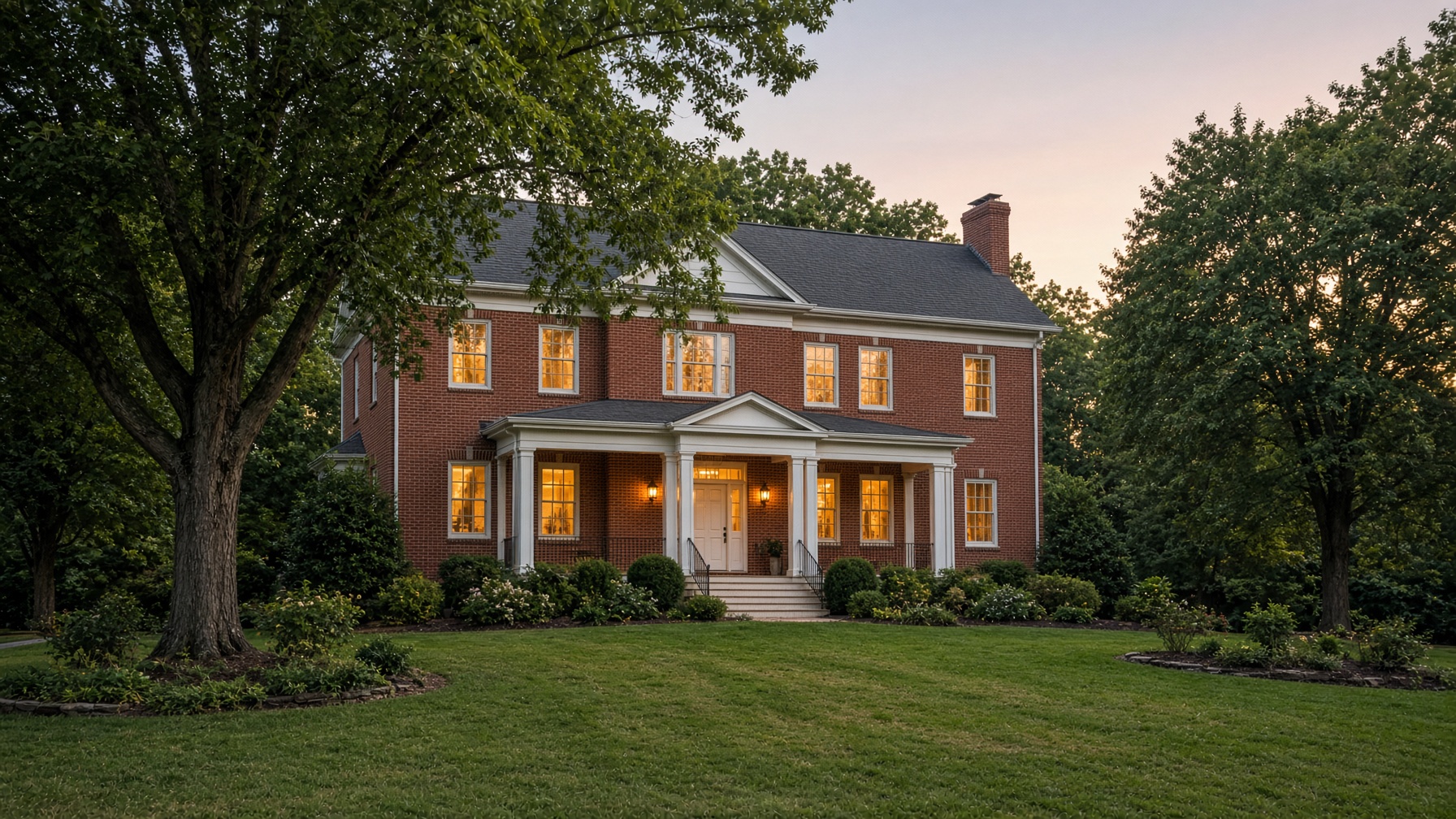
How an $880,000 Franklin Home Became the Right Home With One Renovation Loan
All ArticlesA Fannie Mae HomeStyle loan can roll purchase and contractor work into one conventional mortgage. The seller still gets the full price at closing. The renovation money sits in a draw account.
We were standing in the kitchen of an $880,000 home in Franklin, Tennessee, listing everything the buyers wanted to change. At some point the conversation shifted. They stopped asking, "Is this the right house?" They started asking, "What could this house become?"
The kitchen felt dated. The carpet needed to go. They wanted hardwood stairs, fresh paint, updated flooring, a renovated primary shower, office doors, deck repairs, and a cleaner backyard. Then we got to the basement.
The house, as it sat, was not done for them. The things you cannot easily change were exactly right: neighborhood, lot, privacy, floor plan, square footage, full basement.
Location is the one thing you cannot renovate
You can change the kitchen, the carpet, the bathrooms, the basement. You cannot pick the house up and move it. You cannot renovate the school district. You cannot add land to the lot.
Instead of "Should we buy this and spend $100,000 cash after closing?" we asked, "Can we roll the purchase and the renovation into one loan?"
The numbers on this Franklin purchase
Sales price: $880,000. Contractor repair budget: $100,000. Contingency reserve at 10%: $10,000. Estimated renovation-related fees: $7,000. Total project cost: $997,000.
That is a Fannie Mae HomeStyle Renovation conversation. Confirm current eligibility on Fannie Mae's product page. This file is an example, not a promise that your house, contractor, or appraisal will look the same.
Most buyers think they have two options
Option 1: buy it and fix it later with cash. The problem is $80,000 to $100,000 out of pocket on top of closing, moving, and a new payment.
Option 2: wait for the perfect move-in-ready house in the right location. That house is the most competitive listing on the market. It goes fast and it goes over asking.
Most people settle or stall. There is a third option.
What a HomeStyle renovation loan actually does
A HomeStyle loan lets a qualified buyer finance the purchase price, approved contractor work, a contingency reserve, and related renovation fees inside one conventional mortgage.
The seller still gets the full $880,000 at closing. The renovation funds do not go to the buyer. They sit in a renovation account and release in stages as work is completed and inspected.
How the appraisal works
The appraiser looks at the home in its current condition and "as completed" after the approved work. They review the contractor bid and scope, then estimate finished value. The lender uses that as-completed value to see whether the property can support the total project and the loan amount.
Spending $100,000 does not guarantee the value goes up $100,000. The appraiser still weighs comps, the neighborhood, size and quality, and whether the finished house is over-improved for the street. If the appraisal does not support the full project, you reduce the scope or bring cash.
Why the renovation budget was $117,000, not $100,000
The construction plan was $100,000. The extra $17,000 covered a 10% contingency, the renovation appraisal, consultant review and work write-up, draw inspections, permit allowance, and a final inspection. Those costs protect the buyer, the lender, and the project.
What got done now versus later
Phase one: kitchen, primary shower, interior paint and flooring, carpet out, hardwood stairs, deck repairs, office doors. High-impact everyday items inside the $100,000 contractor budget.
Later: basement kitchenette and bath, screened porch, major landscaping, a pool. Those wait until they live there and have more equity.
How the contractor actually gets paid
The contractor does not get $100,000 at closing. Buyer and contractor agree on scope and price. The lender approves the contractor and the project. The loan closes. Funds sit in the renovation account. The contractor finishes a stage. An inspector verifies it. The lender releases that draw.
The crew has to be comfortable with staged payments, detailed bids, documentation, and lien waivers. Not every contractor works that way. Find that out before you write.
Tell the listing agent how this closes
If the listing agent has never seen a renovation loan, the first question is whether it will actually close. Offers die because nobody explained it, not because the loan was bad.
The right agent tells the listing side before the offer hits: the seller gets the full purchase price at closing, renovation money sits in a separate account the buyer never pockets, and it closes like a conventional loan. Sellers are not afraid of renovation loans. They are afraid of the unknown.
The estimated loan structure on this file
Using 95% financing, and only if the appraisal supports the project: total project $997,000. Estimated loan $947,150. Buyer contribution toward purchase and renovation about $49,850. Standard closing costs, taxes, insurance, and escrows still apply and are sometimes offset by seller credits.
Fannie Mae publishes HomeStyle LTV limits in its eligibility matrix. Owner-occupied purchase can go up to 97% in some cases, including certain HomeReady combinations. This file used 95%. Confirm the current matrix. Do not treat these numbers as your quote.
Why this approach worked
A fully renovated version of this same house, same neighborhood, same basement and yard, at a similar price, would have been hard to find.
They did not settle for a house they did not love as-is. They did not overpay for someone else's finishes. They bought the bones and financed the work that mattered.
The house did not have to be perfect on day one. It had to make sense once purchase and renovation lived in one loan.
If you are looking at a Franklin or Middle Tennessee house that needs work but has the right location, lot, and layout, let's run the numbers. Call or text (615) 955-0461.
Next: What It's Like Buying a Home in Franklin, TN: Neighborhoods, Prices, and What to Expect, How a Bridge Loan Helps You Buy Before You Sell (Without Moving Twice or Writing a Weak Offer), and You're Pre-Approved. Now What? A Simple Guide to Buying Your Home With Confidence. Or take the Free Home Affordability Check.
Sources and what to verify
This is general mortgage education, not a commitment to lend. Rates, programs, and eligibility depend on the borrower, the property, and investor guidelines. Confirm tax, school, zoning, and legal facts with the official source.
Questions about your specific situation? Call or text Keith directly. No call centers, no runaround.
Book a 15-min ZoomFrequently Asked Questions
Keith Goeringer is a Loan Originator at Barrett Financial Group, NMLS #488023, serving buyers in Franklin, Williamson County, and Middle Tennessee. Call or text (615) 955-0461 or email keith@keithgo.com.
It is a Fannie Mae conventional mortgage that can finance the purchase price plus approved contractor renovations and a contingency reserve in one loan. Confirm current rules on Fannie Mae's HomeStyle page.
Yes. On this structure the seller is paid the contracted purchase price at closing. Renovation funds are held in a separate account and released to the contractor after inspections.
The appraiser values the home as-is and as-completed after the approved scope. The lender uses the as-completed value against the total project cost. A $100,000 bid does not guarantee a $100,000 value increase.
On this Franklin file, $17,000 covered a 10% contingency, renovation appraisal, consultant write-up, draw inspections, permits, and a final inspection. Those are project costs, not extras the contractor pockets at closing.
In draws. Work is completed, inspected, then the lender releases that stage from the renovation account. The contractor must accept staged payments, detailed bids, and lien waivers.
It depends on occupancy, LTV, and whether HomeReady is layered in. This example used 95% financing, or about 5% down on the total project, if the appraisal supported it. Fannie Mae's matrix can allow higher LTV in some cases. Confirm the current limit on your file.
Let's Talk
No forms. No waiting. One conversation can change everything.

More articles

What It's Like Buying a Home in Franklin, TN: Neighborhoods, Prices, and What to Expect
Franklin sits about 21 miles south of Nashville in Williamson County. Median sale price around $925,000 on a rolling 12 months through June 2026. About 37% of homes go under contract in 6 days or fewer. Get fully pre-approved before you tour.
Read
How a Bridge Loan Helps You Buy Before You Sell (Without Moving Twice or Writing a Weak Offer)
A bridge loan can unlock equity in the house you still own so you can buy first, sell second, and write an offer without a home-sale contingency.
Read
You're Pre-Approved. Now What? A Simple Guide to Buying Your Home With Confidence
Pre-approval means you are ready to start shopping, not that your mortgage is finished. Strengthen the file with an Offer Ready Review, sit a Pre-Purchase Zoom, and do not change jobs, open credit, or move large deposits without asking first.
Read