
The Retirement Benefit of Homeownership Nobody Talks About
All ArticlesThe house you buy at 35 can fund a one-level move at 75. Equity is a retirement option, not only a monthly payment.
I'm working a file right now that explains retirement better than half the retirement talk I hear.
The borrowers are in their mid-70s. They already have a reverse mortgage. They're selling that house, taking the equity, buying another house, and using another reverse mortgage.
The interesting part is not the loan. It's the house.
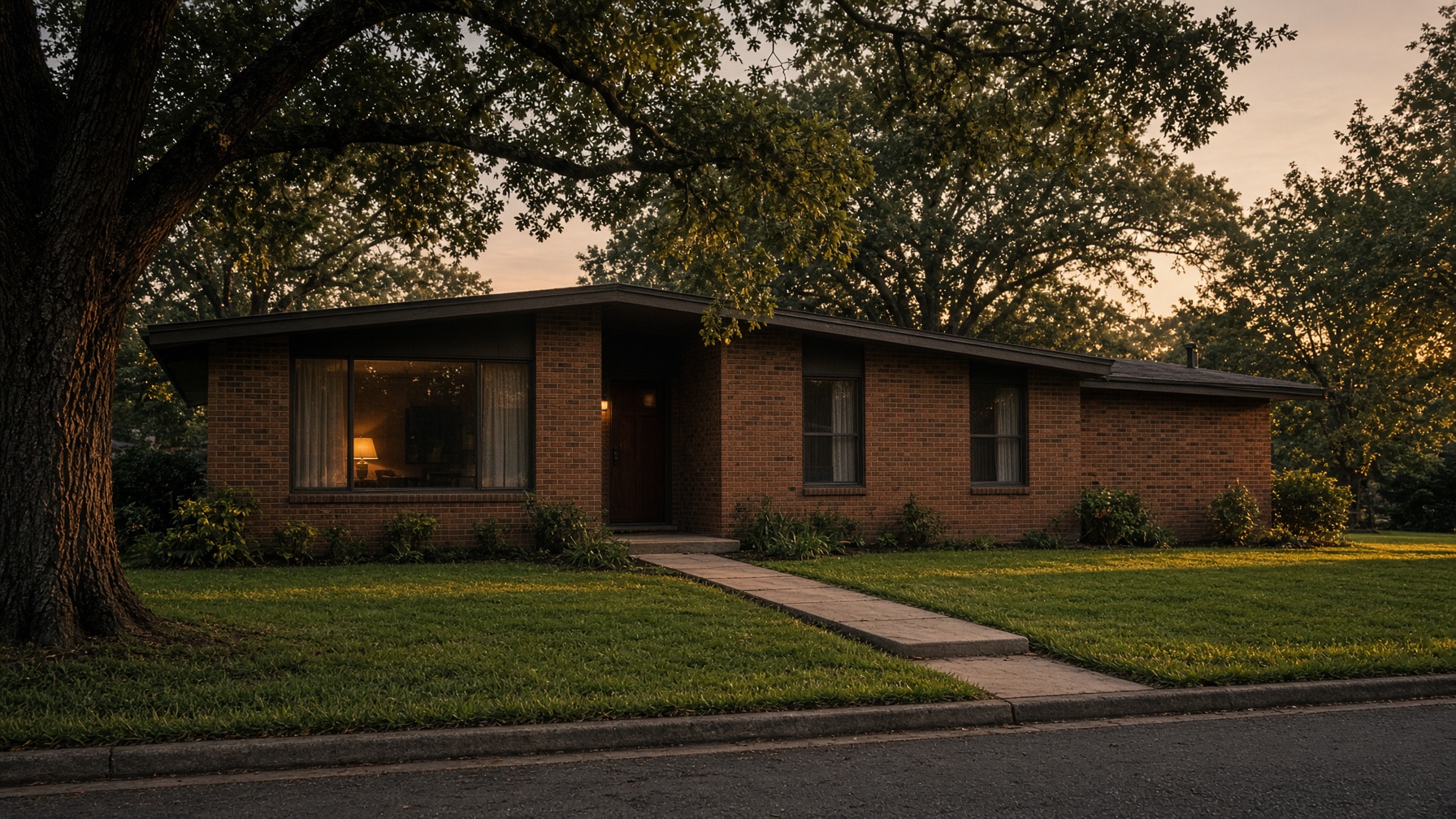
One level. No stairs in the morning. No stairs at night. No laundry between floors. They're moving because the house fits how they live now. They can do it because they spent decades building equity.
If you're 30, Costco is the emergency
Look, if you're 30, retirement feels like another planet. You're figuring out daycare, groceries, the car payment, and why Costco is suddenly $400.
You're not sitting around asking what kind of house you'll need at 78. You shouldn't be.
You should understand what you're building. These clients did not buy their first house with a one-level plan in a drawer. They bought houses. They made payments. They built equity. Decades later, that equity funded another move. Literally.
$2,200 rent versus $2,900 is not the whole comparison
I hear this all the time. "Keith, I pay $2,200 in rent. If I buy, I'm at $2,900. So why would I buy?"
Fair question. If $2,900 wrecks the budget, don't buy the house. You do not get extra credit for being house-poor.
Don't stop the math at $2,200 is smaller than $2,900. If you rent and save the $700, and you actually invest it, now we have something worth comparing. If you rent and spend the $700, the homeowner is slowly building an asset and you are not.
Renting isn't bad. It needs a long-term plan too.
A paid-off house is not cash in the fridge
Fast-forward. You're 70. Retirement accounts. Social Security. Maybe a pension. And a paid-off house worth $500,000.
You can't open the refrigerator and find $50,000 behind the milk. Would be nice. It's still an asset.
NRMLA and RiskSpan put housing wealth for homeowners age 62 and older at about $14.92 trillion in the first quarter of 2026. Trillion. For a lot of households, the home is one of the biggest things they own. Retirement planning that only stares at the 401(k) is incomplete.
More 75-year-olds still have a mortgage
Urban Institute, using the Survey of Consumer Finances: 10.9% of homeowners age 75 and older had a mortgage in 1998. 30.1% in 2022. Almost three times as many.
Harvard's Joint Center for Housing Studies: among homeowners 65 to 79, the share with mortgage debt went from 24% in 1989 to 41% in 2022.
That changes the monthly math. Retirement, stripped of the jargon, is cash in versus cash out.
$2,500 a month for 20 years is $600,000
Two retirees. Each has $6,000 coming in. One has no mortgage. The other has a $2,500 mortgage. The second person needs $30,000 more every year. Twenty years of that is $600,000.
The paid-off homeowner still has taxes, insurance, maintenance, maybe HOA dues. Housing does not become free. The monthly math gets easier. Big difference.
Care is where the budget goes sideways
Now the part everybody wants to skip. Not fancy healthcare. Getting dressed. Bathing. Meals. Getting out of bed. Walking the house without falling. The bathroom.
CareScout's 2025 national medians: a private nursing-home room at $355 a day, $129,575 a year. Semi-private about $114,975 a year. Assisted living about $6,200 a month, $74,400 a year.
"Fine. I'm staying home." I'd rather stay home too. A non-medical caregiver had a national median of $35 an hour in that same survey. Forty-four hours a week is about $80,000 a year. That is not 24-hour care.
Medicare is not long-term care insurance
Medicare covers certain medical care and certain skilled nursing stays. Needing help bathing, dressing, eating, or using the bathroom for years is a different category. Medicare says it does not pay for most long-term custodial care.
For skilled nursing in 2026, after the Part A deductible: days 1 through 20 have no daily coinsurance. Days 21 through 100 are $217 a day. After day 100, you have the full cost.
Break a hip, need rehab, Medicare might be in the mix. Need someone helping you live every day for four years? Different conversation.
Medicaid does pay for a lot of long-term nursing care if you qualify. Income, assets, and state rules matter. There is a five-year lookback on certain transfers. Estate recovery can show up later. I still don't love "I'll worry about that at 80" as a plan.
I'd rather have more than one way to deal with it. Savings. Insurance. Income. Home equity. Family support, if you have it. Medicaid if you qualify. Different files use different mixes. I want choices.
A $600,000 house gives you decisions
Say you own a $600,000 home with no mortgage and you suddenly need another $4,000 a month for care. That's a serious expense. You also have a serious asset.
Sell. Downsize. Use investments first. Access some equity. Look at a reverse mortgage. There isn't one correct answer. You have something to work with.
A reverse mortgage is not a cable-TV product
Strip away the 2 a.m. ads. For an eligible homeowner, an FHA-insured HECM lets you access equity without a required monthly principal-and-interest payment while you keep meeting the loan rules.
You keep title. You still pay taxes. You still keep homeowners insurance. You maintain the house. You meet the occupancy rules. Interest and other charges are added to the balance. There's no mortgage fairy.
For the right person, it is another way to use housing wealth in retirement. Sometimes that means staying. Sometimes it means moving.
HECM for Purchase is the file I'm working
HUD allows an eligible borrower 62 or older to use a reverse mortgage as part of buying a new primary residence. That's a HECM for Purchase. HUD-approved counseling is part of the process.
These clients are selling the current home. The old reverse mortgage gets paid off. Remaining equity goes into the new house. The new house is one level. That's what matters.
The mortgage is structuring the transaction. The equity made it possible. The move is about making life easier. That's retirement housing.
Your dream house at 45 can be a pain at 80. Three floors. Big yard. Bedroom upstairs. Laundry downstairs. Steps at the front door. Steep driveway. At 45, who cares. At 80, those little things stop being little.
They're moving before the house becomes a problem. Not waiting until somebody gets hurt. Not waiting until stairs become impossible. That's using choices while you still have them.
Forever home is often a 15-year home
I hear "we're buying our forever home" every week. Maybe. Or it's the place you raise kids. Then the kids leave. You retire. You don't need 3,800 square feet. You don't want the yard. You don't want the stairs.
You sell it. If you built equity, that first house helps fund the next one. That isn't a failed forever home. Life changed. Houses are allowed to change with it.
Don't empty a 3% mortgage if the rest of the file is on fire
I like lower monthly obligations before retirement. A lot.
I'm not telling someone with a 3% mortgage and no retirement savings to dump everything into the house. Credit cards at 22% first. A company 401(k) match if you're skipping it. An emergency fund if you don't have one. Then the mortgage.
Closer to retirement, the paycheck stops. The less you have to send out every month, the less retirement income has to replace.
The house is not an ATM
Sometimes pulling equity out is the right move. If every time the house goes up you borrow the gain for cars, vacations, and lifestyle, you're spending part of tomorrow's asset today.
That equity can feel boring at 45. At 75 it might be the move, the care, the lower payment, or the option that lets a spouse stay in the house.
Long-term care insurance is a funding question
I'm not an insurance agent. I'm not telling you to buy a policy tomorrow. You should know the product exists. Some policies help with in-home care, assisted living, or nursing facilities. Terms and cost matter. It usually gets more expensive as you get older.
The question is not "do I need long-term care insurance." The question is "if I need care later, where is the money coming from."
Your body is a retirement asset too
Yeah. The mortgage guy is telling you to exercise. Strength, balance, mobility. You can have a paid-off house, a giant account, and great insurance. If you can't move around the house safely, life gets harder.
That's another reason the one-level house made me stop. They're adapting the house to their life before they have to.
Send the numbers while you still have choices
If you're younger, I'm not asking you to plan a nursing-home room. Think longer than next month. If you buy, what are you building. If you rent, what are you building instead.
If you're 55 or 60: what's the mortgage balance. What's the budget without a paycheck. Does the house fit the older version of you. If something changes, what options do you have.
These clients didn't know 30 years ago they'd want a one-level house, or use a reverse mortgage, or what their health would look like in their mid-70s. They spent decades owning homes and building equity. Now they need something different. And they can do something about it.
If you're getting closer to retirement, helping your parents, or trying to see whether a reverse mortgage fits a specific file, reach out. I'll walk the numbers. Sometimes a reverse mortgage makes sense. Sometimes the better answer is something else. I'd rather know that while we can still choose.
Next: What It's Like Buying a Home in Franklin, TN: Neighborhoods, Prices, and What to Expect, 50-Year Mortgage Pros and Cons: Who Should Use It and Who Should Avoid It, and You're Pre-Approved. Now What? A Simple Guide to Buying Your Home With Confidence. Or take the Free Home Affordability Check.
Sources and what to verify
- NRMLA / RiskSpan: senior housing wealth, Q1 2026
- Urban Institute: older homeowners with a mortgage, 1998 to 2022
- Harvard Joint Center for Housing Studies: mortgage debt, homeowners 65 to 79
- CareScout Cost of Care Survey 2025
- Medicare: skilled nursing facility care costs, 2026
- Medicare: long-term care is generally not covered
- HUD: Home Equity Conversion Mortgage (HECM)
- Consumer Financial Protection Bureau: reverse mortgages
- Medicaid eligibility and long-term care
This is general mortgage education, not a commitment to lend. Rates, programs, and eligibility depend on the borrower, the property, and investor guidelines. Confirm tax, school, zoning, and legal facts with the official source.
Questions about your specific situation? Call or text Keith directly. No call centers, no runaround.
Book a 15-min ZoomFrequently Asked Questions
Keith Goeringer is a Loan Originator at Barrett Financial Group, NMLS #488023, serving Franklin, Williamson County, and Middle Tennessee. He will walk the numbers on a sale, a HECM, or another option. Call or text (615) 955-0461 or email keith@keithgo.com. A reverse mortgage also requires HUD-approved counseling.
It can, if you build equity and do not spend it all along the way. The payment at 35 is one decision. The options that equity creates at 75 are another. Renting can work too if the difference actually gets invested. There is no extra credit for being house-poor.
On an FHA-insured HECM, you keep title while you meet the loan rules. You still pay property taxes, keep homeowners insurance, maintain the house, and live there as your primary residence. Interest and other charges are added to the balance. It is not free money. Confirm current HUD and CFPB rules before you apply.
HUD allows an eligible borrower age 62 or older to use a HECM as part of buying a new primary residence. You still bring cash to cover the gap between the HECM proceeds and the price plus closing costs. That is the structure on the one-level purchase in this article. Eligibility, principal limits, and counseling rules come from HUD and the lender.
Medicare says it does not pay for most long-term custodial care. It can cover certain skilled nursing stays after a qualifying hospital stay, with 2026 coinsurance of $217 a day for days 21 through 100, then the full cost. Help with bathing, dressing, or meals for years is a different bill.
Lower monthly obligations before the paycheck stops. That does not mean emptying a 3% mortgage while credit cards sit at 22%, or skipping a 401(k) match, or having no cash reserve. Look at the whole picture, then the mortgage.
Let's Talk
No forms. No waiting. One conversation can change everything.

More articles
What It's Like Buying a Home in Franklin, TN: Neighborhoods, Prices, and What to Expect
Franklin sits about 21 miles south of Nashville in Williamson County. Median sale price around $925,000 on a rolling 12 months through June 2026. About 37% of homes go under contract in 6 days or fewer. Get fully pre-approved before you tour.
Read
50-Year Mortgage Pros and Cons: Who Should Use It and Who Should Avoid It
The 50-year mortgage is all over the news. Everyone has an opinion. Most have never seen one up close. I have.
Read
You're Pre-Approved. Now What? A Simple Guide to Buying Your Home With Confidence
Pre-approval means you are ready to start shopping, not that your mortgage is finished. Strengthen the file with an Offer Ready Review, sit a Pre-Purchase Zoom, and do not change jobs, open credit, or move large deposits without asking first.
Read